Sustained Heat & UV
High ambient temperatures speed up rubber degradation inside the air spring bellows. Constant sun exposure adds to the damage.

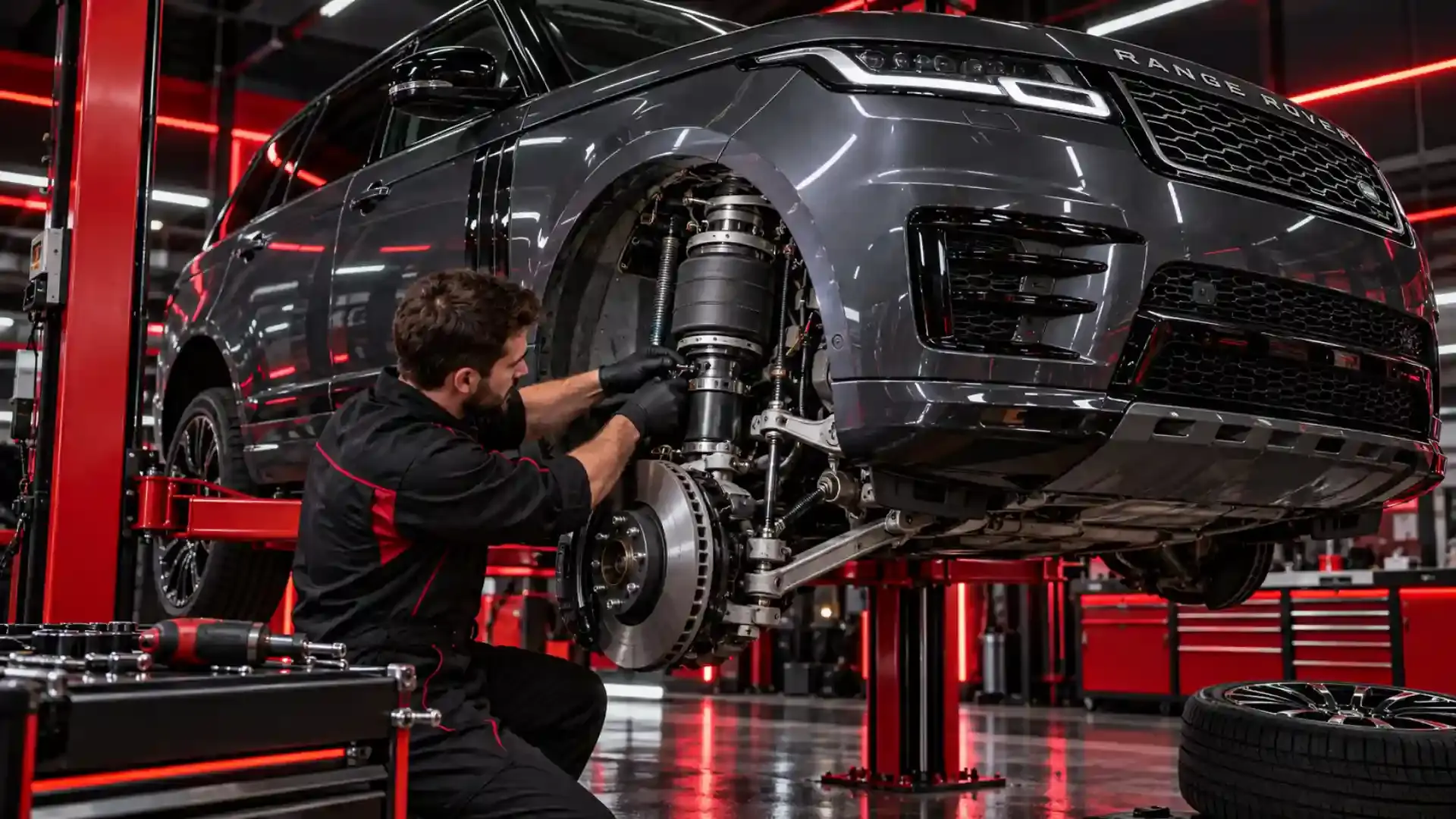
Zenfo Auto Services is one of Abu Dhabi's most trusted names for luxury vehicle care. We blend real passion with dependable craftsmanship in everything we do. Every technician treats your Range Rover with the respect it deserves. You get peace of mind with every job completed here.

High ambient temperatures speed up rubber degradation inside the air spring bellows. Constant sun exposure adds to the damage.
Airborne sand works its way into the compressor housing and sensor linkages. This adds friction to parts that need to move freely.
Moist, salty air near the coastline speeds up corrosion. Height sensor connectors and wiring are affected the most.
Frequent stop-start driving cycles the compressor on and off. This happens far more often than it would on a steady highway drive.
Potholes and kerb strikes around industrial areas put repeated stress on air springs. Valve seals take the same punishment.
Vehicles left stationary for days lose small amounts of pressure. The compressor then has to recover it all at once.
Residual heat gets trapped beneath a parked vehicle. This keeps air lines and seals hot long after the engine switches off.
Our technicians remove the perished or punctured bellows and fit a matched replacement. The corner sensor gets reset next. A full test drive around the workshop then confirms pressure holds evenly.
Matched bellowsSwapping a burnt-out pump always comes paired with a new dryer and relay. Leaving either part behind almost guarantees the same failure returns within a few months.
Pump + dryer + relaySolenoid testing isolates the exact port at fault inside the block. Only that single valve gets replaced. This avoids swapping the entire assembly and driving up your bill.
Single faulty portCorroded connectors and worn linkage arms get replaced at each affected corner. The control module is then fully recalibrated. Ride-height readings return to accurate factory values across the board.
Full recalibrationPressure-hold testing traces a slow leak back to a cracked tank or a perished line fitting. Only the faulty section gets replaced. Every other healthy component stays completely untouched.
Only the faulty sectionStruts, compressor, dryer, valve block, and reservoir all get replaced together. This suits vehicles where age has finally caught up with every component of the system at once.
Every componentTap every sign you have noticed on your Range Rover.
Pick what you are seeing. The diagram shows where our technicians look first.
A single corner dropping overnight almost always points to a leaking air spring. It could also be a stuck valve block solenoid at that corner.
A pressure-hold test confirms the exact part before anything is replaced.

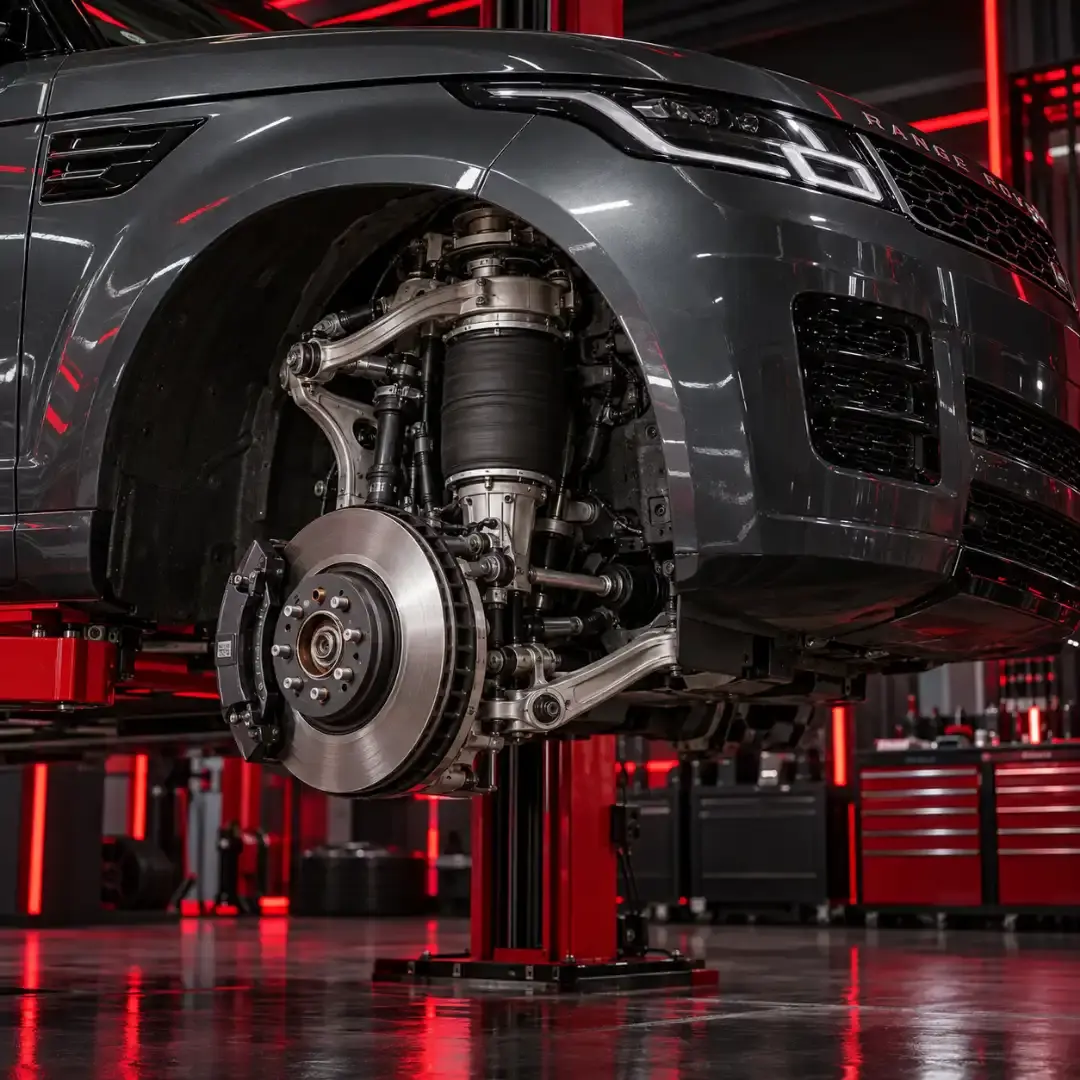
The same technicians handling your Range Rover also work daily on BMW, Porsche, Mercedes, and Ford. This builds a depth of European suspension knowledge most single-brand garages cannot match.
Every replacement part fitted meets or exceeds original manufacturer specifications. Each part is torqued to published values. Ride quality, comfort, and reliability closely match what originally left the factory floor.
10 years of hands-on experience with European and British marques stands behind every repair. Technicians recognise a genuine air suspension fault the moment it appears on the ramp.
A separate bay is equipped specifically for pneumatic suspension work. This keeps these jobs away from general repairs. Technicians can then focus without interruption on your vehicle and its fault.
The Musaffah facility holds official MOIAT certification. Vehicles stay stored under cover throughout the repair, away from direct sun and blowing sand.
Findings are explained in plain language before any decision is needed. You will understand what failed, why it failed, and what each repair option means going forward.
Every control module gets read on manufacturer-level diagnostic equipment. This captures live corner-height data from all four corners before any part is touched.
Soap-and-water leak testing and pressure-hold checks pinpoint exactly which part has failed. This could be an air spring, a valve, or a line. Nothing gets guessed at.
You receive the full diagnosis and the exact parts required. You also get a clear written price. No work begins until you give your approval.
The failed air spring, compressor, or valve block gets replaced with quality parts. The suspension control module is then recalibrated to correct ride height.
The vehicle gets road tested at normal and full ride height. A final module scan then confirms every fault code has cleared for good.
A little regular attention keeps the whole system healthy for much longer, especially in Abu Dhabi's heat. These simple habits go a long way toward avoiding a costly breakdown down the road.
Exercise the system monthly by cycling through all ride-height settings.
Address a sag or a leak immediately rather than continuing to drive on it.
Park under cover where possible to reduce heat and sun exposure
Book an annual module scan to catch a stored fault code early.
Wash the undercarriage regularly to clear sand from the compressor housing.
Avoid overloading the vehicle beyond its rated payload capacity.
Keep tyres inflated to specification to reduce uneven load across the air springs.
Schedule an inspection before the summer's peak heat season begins.
Don't wait for a small issue to turn into a bigger repair bill. Our workshop is ready to diagnose your Range Rover today. Your comfort and safety are always our top priority here. Book a free inspection now and drive away with a level, comfortable ride.
Car sagging right now? Our advisors answer the phone and WhatsApp during workshop hours.
Ask an advisor WhatsAppWatch for an overnight sag at one corner. A compressor that runs longer than normal is another sign, along with a hissing sound or a Suspension Fault message on the dashboard. Any of these signs is worth a diagnostic scan before the fault spreads.
A single corner dropping overnight almost always points to a leaking air spring. It could also be a stuck valve block solenoid at that corner. An even drop across all four corners suggests the reservoir or the compressor instead.
Driving on a deflated air spring can damage the strut housing itself. A simple spring replacement can then turn into a full corner rebuild. A prompt diagnostic visit protects the rest of the system.
In rare cases, a minor surface nick gets sealed as a short-term fix. A genuinely punctured or perished bellow needs full replacement instead. Only a new part holds pressure reliably over the long run.
A single air spring or sensor replacement is usually finished within a day. A full system overhaul covering all four corners takes longer, since every component gets replaced and recalibrated.
Yes. Sustained high temperatures, direct sun, and fine airborne sand all accelerate rubber degradation. They also strain the compressor. This is why local vehicles often need attention sooner than the same model would elsewhere.
A constantly running compressor is almost always chasing an undetected leak elsewhere in the system. It is rarely a fault of its own. Pinpointing that leak first is what actually resolves it.
No. Compressor, valve block, and air spring part numbers differ across generations. This is why model-specific diagnosis always comes before ordering replacement parts.